Spicules: Why Does My Skincare Feel Like Tiny Needles?
There is a skincare treatment making its way through Korean clinics that involves rubbing thousands of microscopic, needle-like structures into the skin.
They are called spicules, and yes, they come from sponges.
Which is probably not what you pictured when someone said “sponge”.
These tiny structures can interact with the outer layer of the skin and create temporary microchannels. Suddenly, the question isn't only what you're putting on your skin.
It's whether you can change what gets through it.
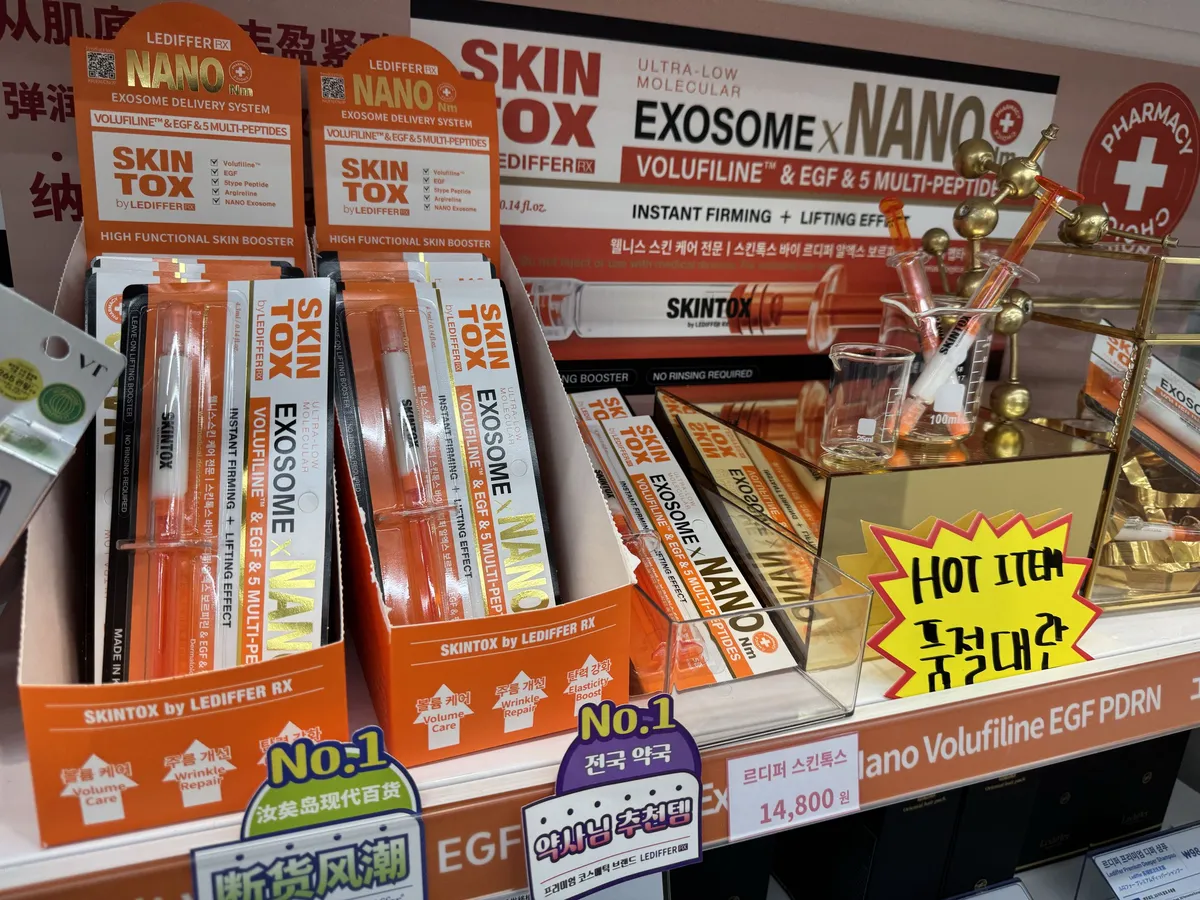
So what exactly is a spicule?
Spicules are microscopic structural elements found in certain sponges. The ones being investigated for skin delivery are often made from silica and have a rigid, needle-like shape.
Some marine sponge spicules are only around 120 micrometres long. Tiny enough to be invisible as individual structures, but quite capable of making themselves known once they're rubbed into the skin.
A 2017 study found that marine sponge spicules could create microchannels in skin and substantially increase the delivery of hydrophilic biomacromolecules. In animal experiments, delivery was considerably higher than with a commercial dermaroller.
The effect wasn't simply theoretical either. The researchers measured the disruption and found that the skin barrier recovered over time.
So the “liquid microneedling” comparison isn't completely ridiculous.
It just needs a few footnotes.
The skin barrier is the whole problem
The stratum corneum is extremely good at keeping things out. That is its job.
It also means that many of the ingredients we like to put on our faces have a difficult time getting beyond the surface in meaningful amounts, particularly larger molecules.
Spicules take a rather physical approach.
Instead of trying to persuade a molecule to cross an intact barrier, they create tiny pathways through it.
A 2021 study tested sponge spicules as a delivery system for therapeutic peptides including insulin and cyclosporine A. The researchers found that the size and shape of the spicules influenced how effectively they increased skin permeability.
So the spicule isn't necessarily the treatment.
It can be the delivery system.
And that distinction becomes rather important.
Then there are the 100, 300 and 700
If you've looked at Korean spicule products, you've probably seen the numbers.
100. 300. 700.
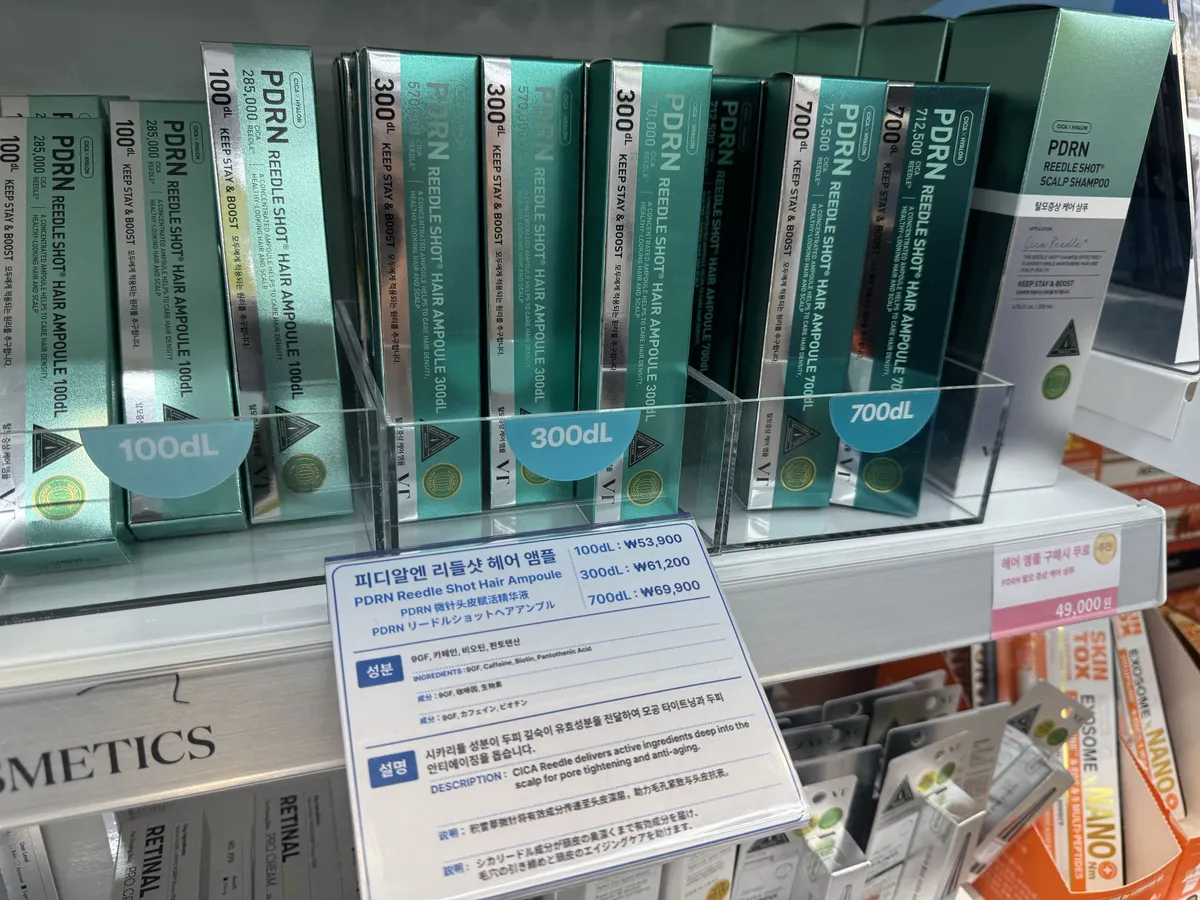
The numbers refer to different product strengths or spicule concentrations, depending on the formulation. They are not clinical doses, and they don't translate neatly into “700 is seven times better than 100”.
Skin, unfortunately, has not agreed to that arrangement.
More physical disruption isn't automatically better. The amount and characteristics of the spicules, the formulation, how often it is used and the condition of the skin all matter.
There is also nowhere near enough clinical evidence to turn a number printed on a bottle into a predictable biological response.
So I find the numbers useful as a way of understanding the products.
I just wouldn't mistake them for a prescription.
What are we actually putting through the barrier?
This is where the Korean skincare shelves become rather busy.
Once you start looking at spicule products, you find PDRN, peptides, EGF, hyaluronic acid, exosomes and various forms of stem-cell-derived material sitting alongside them.
They may all be sold using the language of regeneration, but biologically they are very different things.
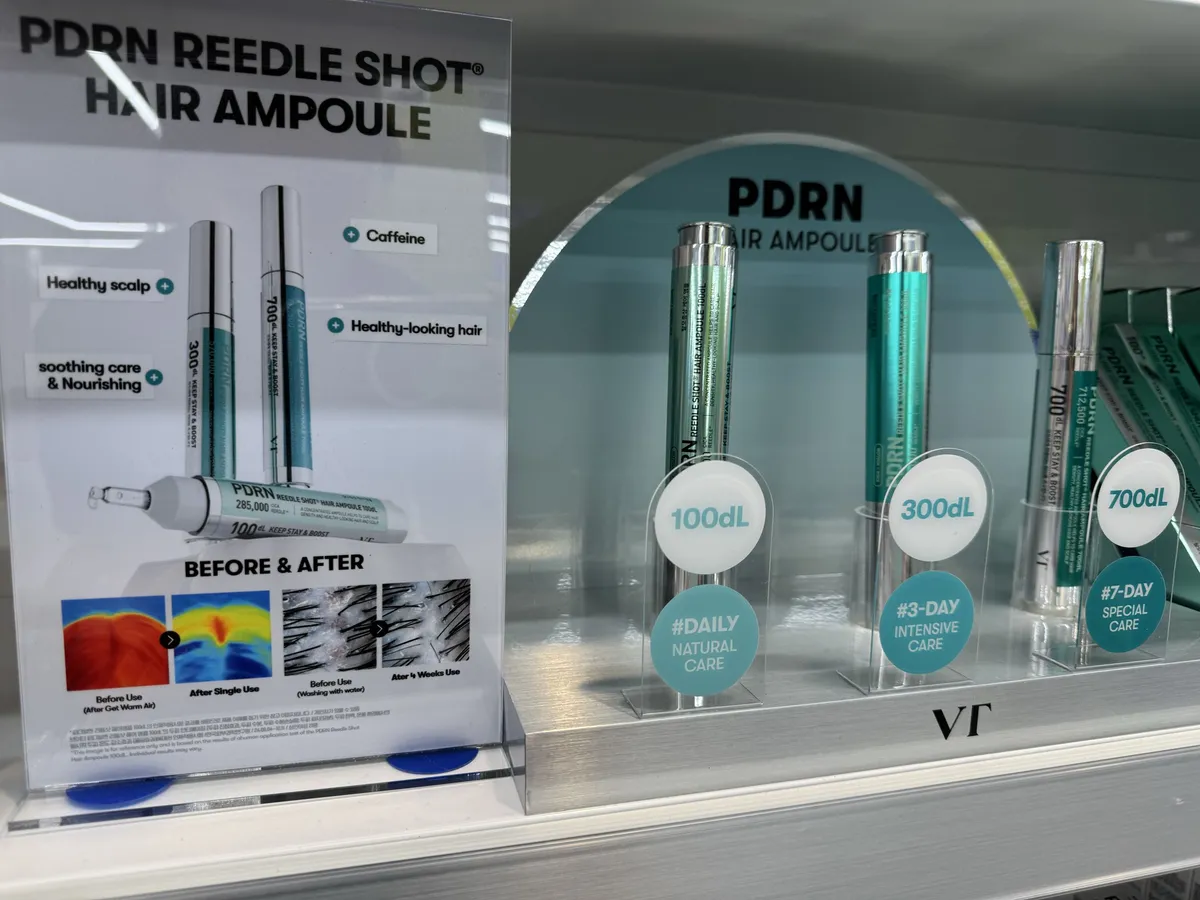
PDRN is a DNA-derived material. Exosomes are extracellular vesicles. Conditioned media and cell culture extracts are mixtures containing material produced or released by cultured cells.
Those terms shouldn't simply be swapped around because they all sound suitably futuristic.
The ingredient list is often much more useful.
The ingredient list tells a rather different story
One of the products I came across lists human umbilical cord mesenchymal stem cell culture extract at 97,950 ppm, alongside niacinamide, adenosine, sodium DNA, copper tripeptide-1, palmitoyl pentapeptide-4 and a long list of supporting ingredients.
That immediately raises better questions than “does this have stem cells in it?”
What exactly is the culture extract?
Has it been characterised?
Are extracellular vesicles present?
How much?
How stable are they?
And does applying the material to skin produce a meaningful biological effect?
Those questions matter because cell-derived culture material, secretome and purified exosomes are not synonymous.
The front of the box is rarely the most informative part.
But do spicules actually help exosomes get into skin?
This is where the research gets surprisingly specific.
A 2020 study looked directly at this question using marine Haliclona sponge spicules and exosomes derived from human umbilical-cord mesenchymal stromal cells.
Without the spicules, the exosomes had difficulty penetrating the skin.
With the sponge spicules, the researchers measured substantially greater absorption. Total skin absorption of the labelled exosomes increased by approximately 5.87-fold, with increased accumulation in the viable epidermis and dermis.
The study also found that the combination produced anti-photoaging effects in UV-exposed mice, while the irritation observed in the animal model was described as slight and reversible.
That is not a human clinical trial, so it doesn't tell us that an exosome-and-spicule cosmetic will rejuvenate human skin.
But it does answer a much narrower question rather nicely:
Can sponge spicules improve delivery of MSC-derived exosomes through skin?
In those experimental models, yes.
And then there is a newer study
A 2025 study took the idea further by combining nano-encapsulated Wharton's jelly mesenchymal stromal cell secretome with marine sponge-derived spicules.
The researchers tested the system in laboratory experiments, animal models and a small single-arm clinical study.
The spicule system produced significantly greater transdermal penetration than secretome without the spicules. In laboratory experiments, the secretome was associated with fibroblast and keratinocyte activity, keratinocyte migration, type I procollagen production and wound closure.
The clinical component reported increased dermal absorption after a single application, along with reductions in pore number. After two weeks, the researchers reported improvements in wrinkles and pigmentation.
That is a rather interesting proof of concept.
It is also a study I would keep one eyebrow raised for. The human component was small and single-arm, so it cannot tell us that the treatment caused all of those changes or that the same results would occur with commercial spicule products.
What it does show is that spicules can function as a delivery platform for biologically active cell-derived material.
So the spicules don't actually contain exosomes?
This is where the wording gets a little slippery.
A product can be described as using spicules with exosomes, but scientifically that does not mean the sponge-derived spicule itself is an exosome.
The spicule is the physical structure.
The exosome or secretome is the biological material being delivered alongside it or coated onto it.
The 2020 study combined sponge spicules with human umbilical-cord MSC exosomes. The 2025 study went further and coated nano-encapsulated MSC secretome onto marine sponge spicules.
So when a product says something along the lines of “spicule exosome treatment”, I would read that as a formulation and delivery concept rather than imagining that the sponge itself has somehow grown a little pocket of exosomes.
Which, admittedly, would be quite something.
Then there is Exomune
This is where my Korean pharmacy trip became considerably more specific.
SKINPHILIA's Exomune range is built around umbilical-cord-blood stem-cell-derived material and is marketed alongside its spicule treatments.
The company's materials describe the Exomune Booster as combining umbilical cord blood stem-cell conditioned-media exosome with niacinamide. The Exomune Mask is described as containing umbilical cord blood stem-cell exosome and plant exosomes.
The idea is to use the spicule treatment first and then follow with products intended for soothing and after-care.
I wouldn't claim that every molecule applied afterwards suddenly travels deep into the dermis. The experimental research is much more specific than that.
But the basic logic has some surprisingly good preclinical support.
If you deliberately create temporary pathways through the skin barrier, what you apply afterwards becomes a rather more interesting question.
And I am extremely susceptible to a good sheet mask
The Exomune Mask comes as a four-mask set, with 30 mL per mask according to the manufacturer's product information. It is positioned as an after-care mask containing umbilical-cord-blood stem-cell exosome and plant exosomes.
I am a big mask person, particularly after treatments. I like the cooling sensation, and Korean sheet masks have a particular talent for leaving enough serum behind to moisturise approximately half the apartment.
The idea of using the mask after a spicule treatment therefore makes considerably more sense to me than simply buying another serum because the box says “regeneration” on it.
The delivery question comes first.
Then the ingredient question.
So is this just microneedling?
Not quite.
Microneedling uses needles of a defined length to create controlled punctures at a chosen depth. Spicules are incorporated into a topical formulation and interact with the skin differently, with their size, shape and density affecting how they behave.
The 2017 delivery study found that sponge spicules could produce substantially greater delivery of a model molecule than a dermaroller in an animal model.
That doesn't make spicules a replacement for clinical microneedling.
It makes them a rather interesting topical delivery technology.
There is also a useful distinction between delivery and treatment
This is probably the bit that gets lost in the marketing.
If a spicule increases penetration, that tells us something about delivery.
It does not automatically tell us that the thing being delivered produces a meaningful clinical benefit.
The 2020 exosome study gives us evidence that sponge spicules can improve delivery of MSC-derived exosomes in experimental skin models.
The 2025 study gives us a newer example using MSC secretome and a small human clinical evaluation.
Those are useful pieces of evidence.
They are not proof that every product containing spicules, PDRN, EGF or exosomes will produce the same result.
So what do I actually find interesting about them?
Not the idea of deliberately rubbing something sharp into my face for the sake of it.
The interesting part is the engineering.
The skin is an excellent barrier. We have spent decades developing ingredients that look promising in a bottle and then discovering that getting them to the right place in the skin is another problem entirely.
Spicules approach that problem physically.
PDRN, peptides, growth factors, extracellular vesicles and cell-derived secretome then become a second question:
If we can improve delivery, what is actually worth delivering?
That seems like a much more useful question than simply asking which ingredient is currently having its moment.
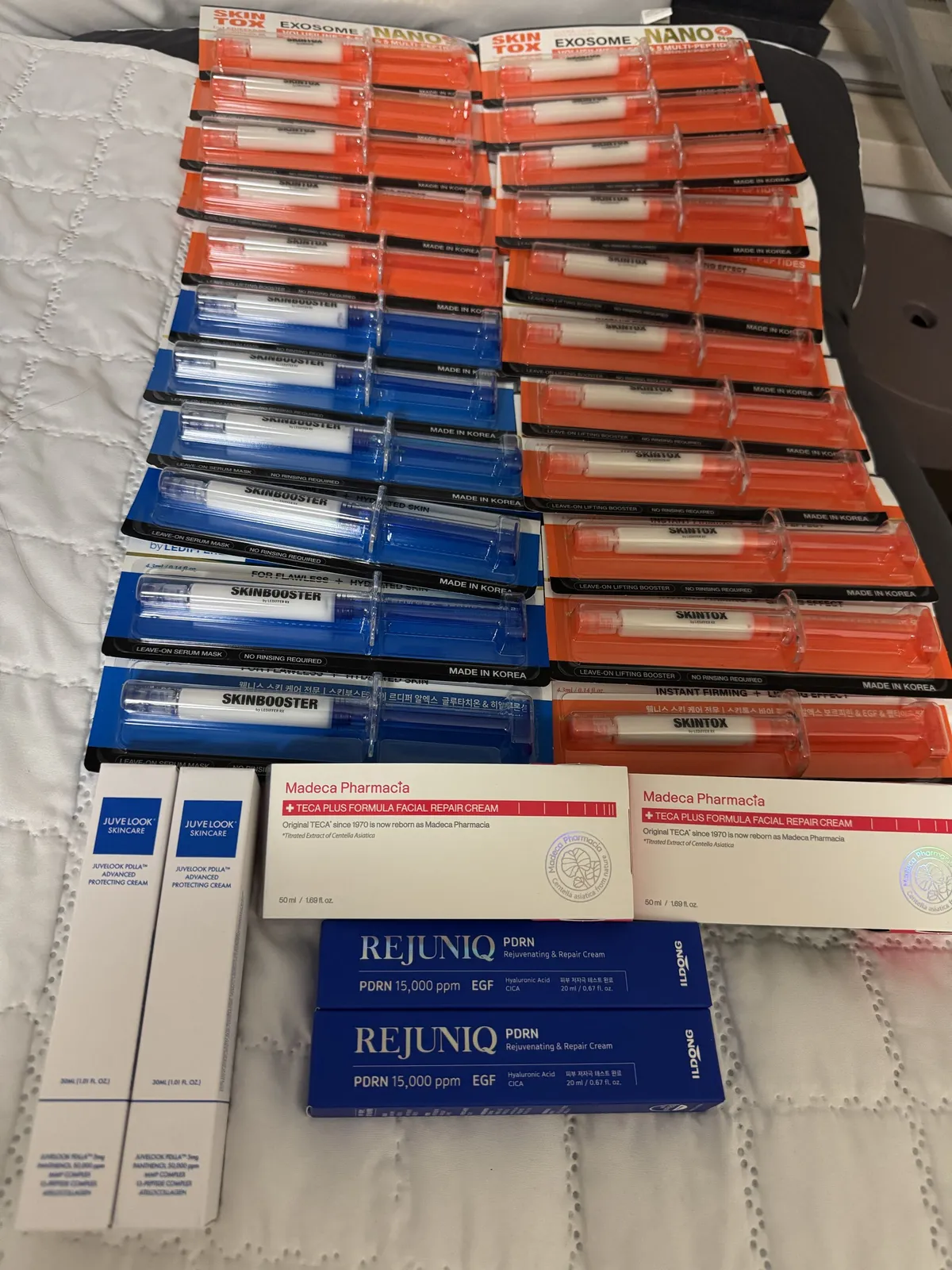
And apparently I have done some field research.
C·🌷
Research notes
Marine sponge spicules as a skin-delivery system
Zhang et al., 2017
Skin Delivery of Hydrophilic Biomacromolecules Using Marine Sponge Spicules.
Spicule-based delivery of therapeutic peptides
2021
Enhanced Skin Delivery of Therapeutic Peptides Using Spicule-Based Topical Delivery Systems.
MSC exosomes + sponge spicules
Zhang et al., 2020
Topical Application of Exosomes Derived From Human Umbilical Cord Mesenchymal Stem Cells in Combination With Sponge Spicules for Treatment of Photoaging.
MSC secretome + marine sponge spicules
Lee et al., 2025
Nano-Encapsulated Spicule System Enhances Delivery of Wharton's Jelly MSC Secretome and Promotes Skin Rejuvenation: Preclinical and Clinical Evaluation.
Extracellular vesicles and skin delivery
2021
Extracellular Vesicles as Potential Theranostic Platforms for Skin Diseases and Aging.
Recent review of skin boosters and spicule delivery
2026
Skin Boosters: 2026 Updated.