The Cell Is Only Half the Product
What I saw inside a Chinese cell-manufacturing facility made me think differently about what an MSC actually is.
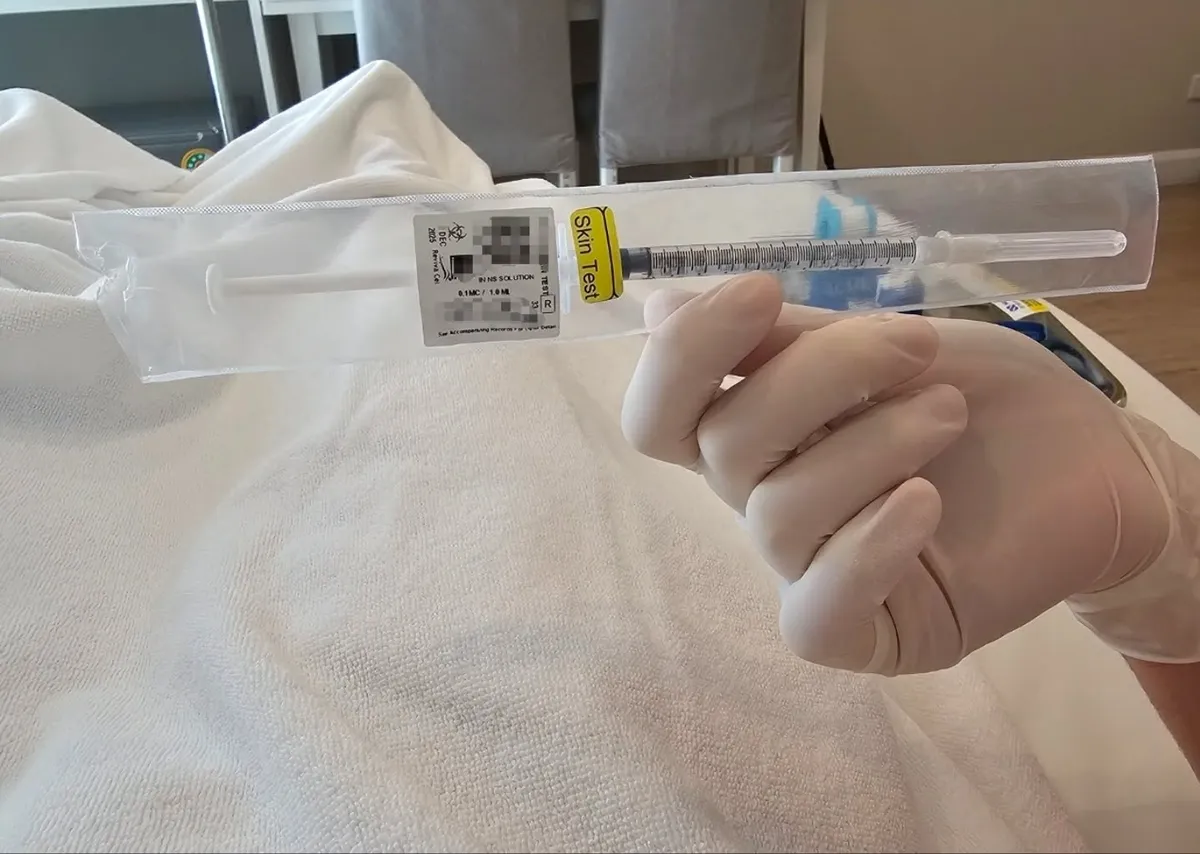
I recently went to China with a very specific curiosity. I wanted to see what happens to mesenchymal stromal cells before they become the thing we usually talk about: a dose in a syringe, ready to be given to a patient.
I had been reading so much about umbilical-cord MSCs, secretomes, extracellular vesicles, extracellular matrix and the increasingly complicated question of what makes one cell preparation different from another that I wanted to see the less glamorous part for myself. Not the treatment room, but the infrastructure behind it.
I visited Beike Biotechnology's cell-therapy facilities and the Shenzhen Comprehensive Cell Bank, where I was able to see the cell-banking and preparation environment, including the large cryogenic storage systems used for biological material.
It was one of those visits where the physical reality makes something you've been reading about suddenly click into place.
We often speak about MSCs as though the cell is the product. In reality, the cell is the end result of a long chain of decisions about where it came from, how it was isolated, how it was expanded, what it grew on, what it was exposed to, how many times it was passaged, how it was stored and how it was prepared before administration.
The more I think about it, the more I wonder whether we have been asking the question in the wrong place.
Perhaps the question isn't simply, "Which MSCs are best?"
Perhaps it is, "What exactly have we manufactured?"
The part of stem-cell therapy that patients rarely see
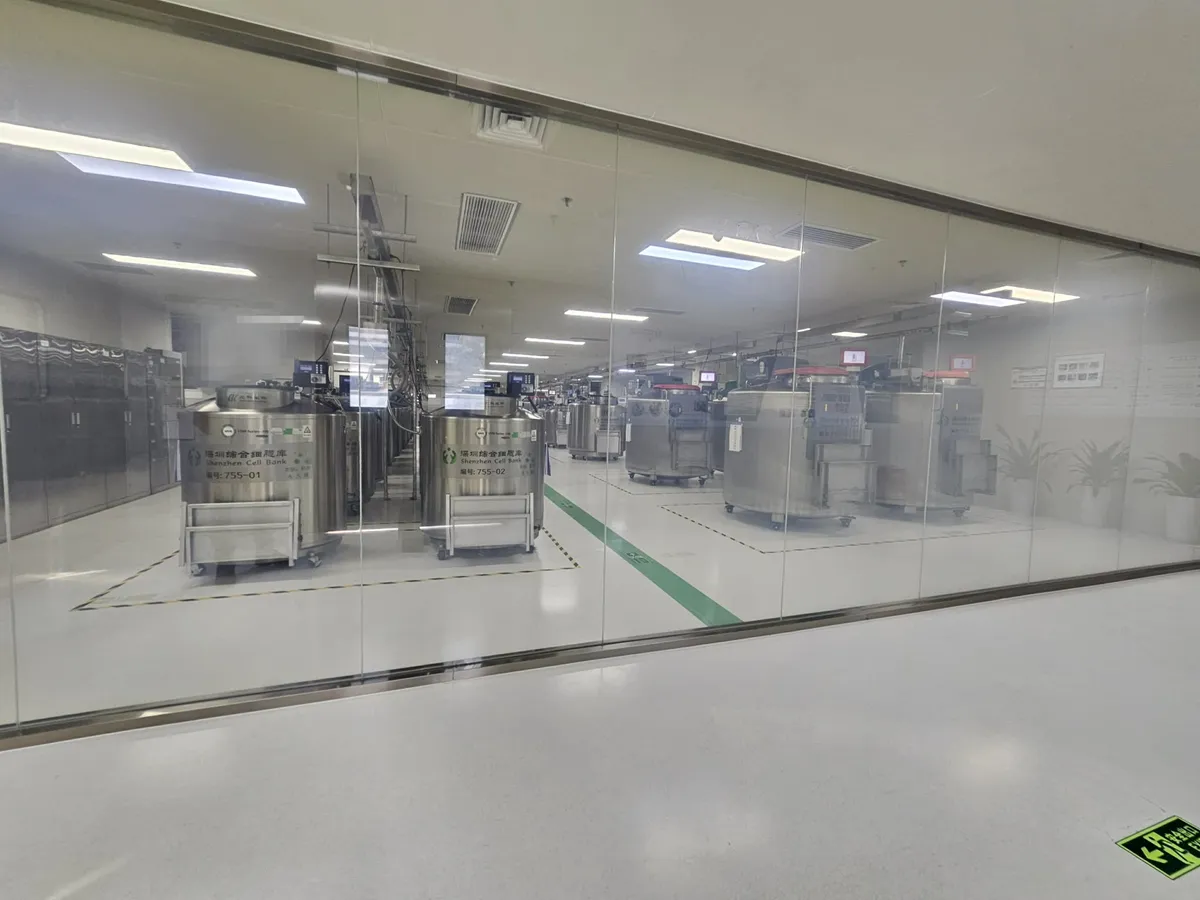
There is something rather humbling about standing in front of a cryogenic cell bank.
The tanks are enormous, quiet and almost industrial-looking. There is none of the visual drama we tend to associate with biotechnology. No glowing futuristic equipment, no cinematic moment where somebody peers into a microscope and announces that they've discovered the future.
Instead, there are storage vessels, laboratories, documentation and systems designed to keep living biological material identifiable, controlled and available.
That is actually a much better picture of what cellular medicine looks like.
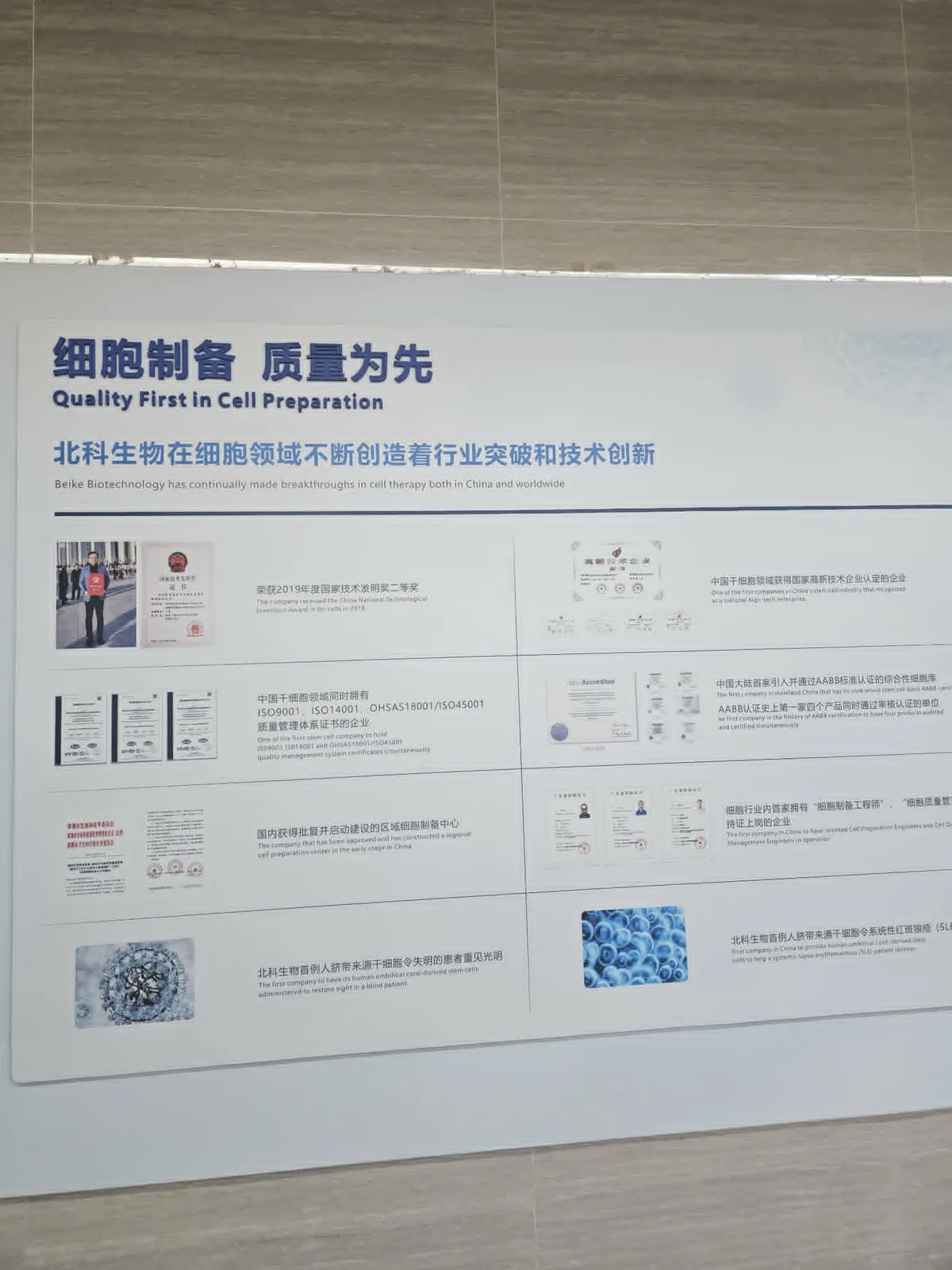
Beike describes a network of cell banks and cell-preparation laboratories across China, with processes covering donor selection, cell preparation, quality control, storage and delivery. Its Shenzhen facility has also reported external accreditation for specified cell-storage and cell-therapy activities. None of this establishes that a particular MSC treatment is clinically effective, of course. Quality systems and clinical efficacy are different questions, and I think it is important not to blur them. But it does show the scale of infrastructure required when living cells are being treated as therapeutic products.
What struck me most was the idea that the journey of an MSC does not begin when it is injected.
It begins much earlier.
A cell has a history
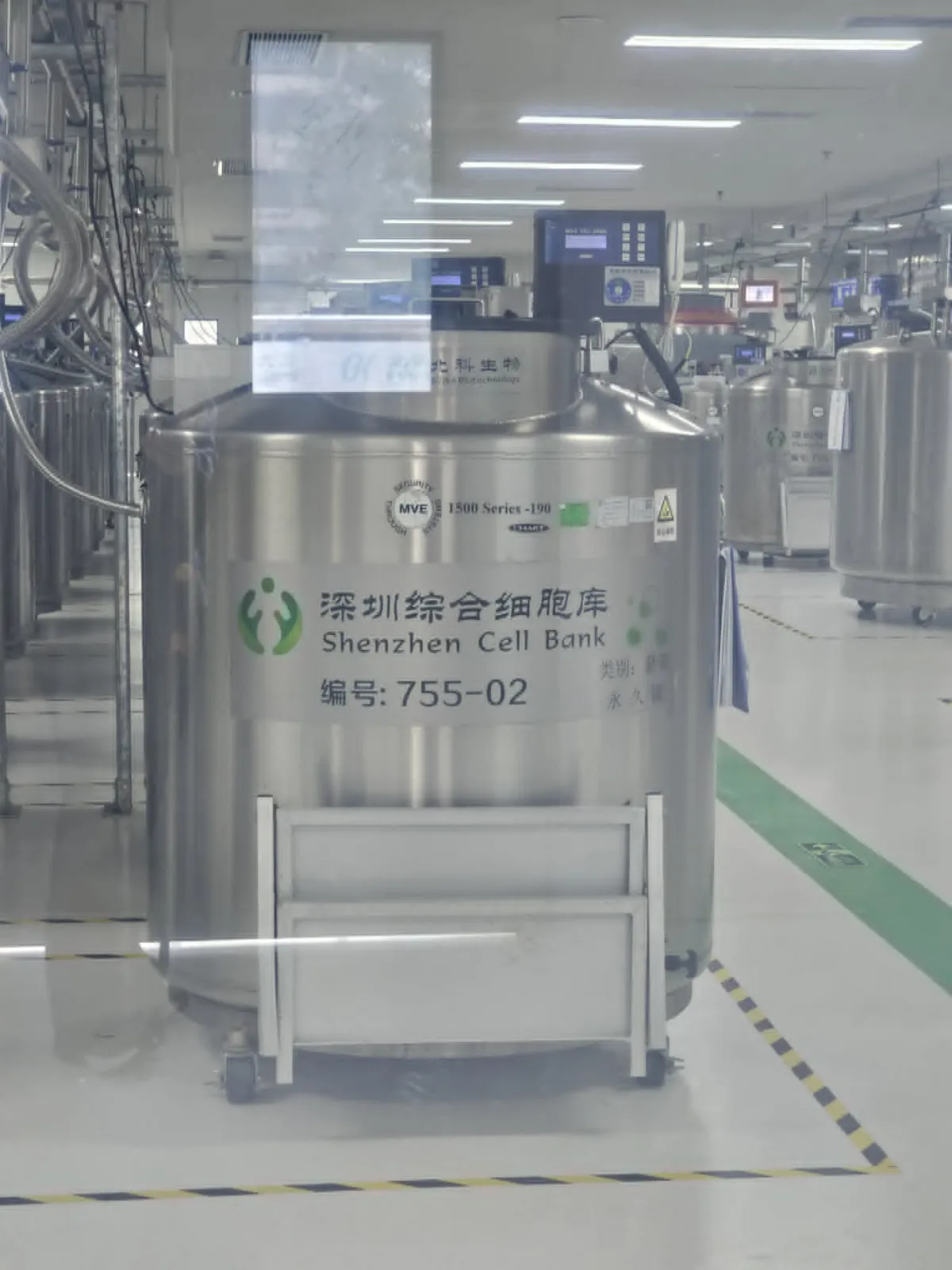
An MSC doesn't arrive in a vial as a blank biological object.
It has a donor and a tissue of origin. It has experienced a particular isolation process and a particular culture environment. It has been exposed to particular nutrients, growth factors, surfaces, oxygen levels and mechanical conditions. It has divided a certain number of times. It has been frozen, thawed and prepared in a particular way.
All of those things leave some kind of biological imprint.
This becomes especially important when we stop thinking only about what an MSC is and start thinking about what an MSC does.
MSCs are highly responsive cells. Their therapeutic effects are increasingly understood to involve paracrine signalling, immunomodulation and the release of a complex collection of soluble factors and extracellular vesicles. Research into MSC secretome manufacturing has shown that donor, passage number, cell density, culture medium, conditioning time and the surrounding microenvironment can all influence what the cells produce.
That makes the culture environment rather more consequential than it first appears.
If the environment changes the cell, and the cell's behaviour changes what it releases, then manufacturing isn't merely about producing more MSCs.
It may be about producing a particular state of MSC.
Beike has actually published on the manufacturing problem
One reason my visit felt particularly relevant was that this isn't just a theoretical concern.
In 2024, researchers from Shenzhen Beike Biotechnology published a peer-reviewed study describing a GMP-compliant manufacturing method for Wharton's jelly-derived MSCs. They worked through the process of scaling production from laboratory culture to a pilot-scale cell-factory system, establishing master and working cell banks and evaluating the resulting cells for identity, purity, viability, potency, proliferation, genomic stability and microbiological safety.
That list is worth pausing over.
Identity. Purity. Viability. Potency. Stability. Safety.
It is a very different vocabulary from simply saying, "We have stem cells."
And this is where cellular medicine starts to resemble pharmaceutical manufacturing, except that the active ingredient is alive and capable of responding to the manufacturing process itself.
A tablet doesn't suddenly alter its behaviour because it spent an extra day growing on a particular surface.
An MSC can.
So what are we actually manufacturing?
This is the part I have become increasingly fascinated by.
Traditional MSC expansion relies heavily on cells attaching to a surface and multiplying across it. That works reasonably well at small scale, but becomes awkward when you need very large numbers of cells. You can keep adding culture vessels, but eventually the process becomes labour-intensive, space-hungry and difficult to control consistently.
Microcarriers offer another possibility. They give adherent cells a much larger surface area while allowing them to be grown in suspension within a bioreactor, making larger-scale production more practical.
But there is a beautiful complication here.
The microcarrier is not simply a little floating piece of scaffolding.
The cell can sense it.
The material, surface chemistry, stiffness, structure and the molecules presented to the cell can influence the way the cell attaches and signals.
And that brings us to a paper that appeared in npj Microgravity this month.
The space experiment that is really about Earth
A study published in npj Microgravity in August 2026 investigated collagen-heparan-sulfate microcarriers for MSC culture, including cryopreservation, thawing and expansion aboard the International Space Station. The headline is, naturally, "stem cells in space."
But the part I kept thinking about was happening much closer to home.
The researchers engineered the microcarrier surface using collagen and heparan sulfate and found that the different surface chemistries affected MSC growth and behaviour. In microgravity, the cells expanded differently from ground controls, while the engineered microcarriers supported cell attachment and recovery. Most notably for the regenerative-medicine side of the story, secretome analysis showed changes in extracellular-matrix output and increased extracellular-vesicle release, with bioactive microRNA cargo retained.
The spaceflight is extraordinary, but it isn't really the point for me.
The more important idea is that the environment in which we manufacture the cell can influence the biological material that the cell produces.
That is a much bigger story.
The cell and its secretome are beginning to look like one manufacturing problem
I've been following the research around MSC secretome and extracellular vesicles alongside the work on extracellular matrix and acellular dermal matrices, and I keep finding myself coming back to the same idea from different directions.
The environment matters.
We know that changing culture conditions can alter MSC behaviour and the quantity and characteristics of the extracellular vesicles they release. Passage number, cell density and other culture parameters have been shown to influence EV production and biological activity.
The same principle appears in work on MSC secretome manufacturing. Reviews of the field have pointed to donor source, expansion conditions, passage number, confluency, culture medium, conditioning period and microenvironmental cues as variables that can affect the resulting secretome.
So a rather elegant chain begins to emerge:
manufacturing environment → MSC state → secretome and extracellular vesicles → biological activity
This is why I think the manufacturing question deserves much more attention than it usually receives.
We can become very focused on the number of cells in a dose, but cell number is only one characteristic of a cellular product.
Two preparations could contain the same number of viable MSCs and still have different biological properties because their expansion histories and environments were different.
The phrase "15 million MSCs" therefore tells us something important, but it doesn't tell us everything we want to know.
Viability isn't potency
This is where quality control becomes much more than a regulatory exercise.
A cell can be alive without necessarily having the particular functional properties we care about therapeutically.
That is why modern MSC manufacturing studies increasingly look beyond simple cell counts and viability. Researchers are interested in identity, purity, genomic stability, functional assays and potency, alongside the more familiar measures of cell number and survival. The 2024 Beike manufacturing study, for example, explicitly evaluated potency as part of its product characterisation.
The same principle becomes even more important when we move from the cells themselves to their secretome or extracellular vesicles.
A higher EV yield doesn't necessarily mean a more potent EV preparation. The cargo, composition, biological activity and consistency of the product matter as well. Reviews of MSC-EV translation have therefore emphasised the importance of controlling the parent-cell source, culture conditions, passage history, storage and recovery, as well as defining meaningful quality attributes and potency assays for the final product.
This is one of those areas where a little manufacturing language actually makes the biology more interesting.
The process becomes part of the product.
From an umbilical cord to a vial
When you are sitting in a treatment room looking at a syringe, it is very easy to think only about what is inside it.
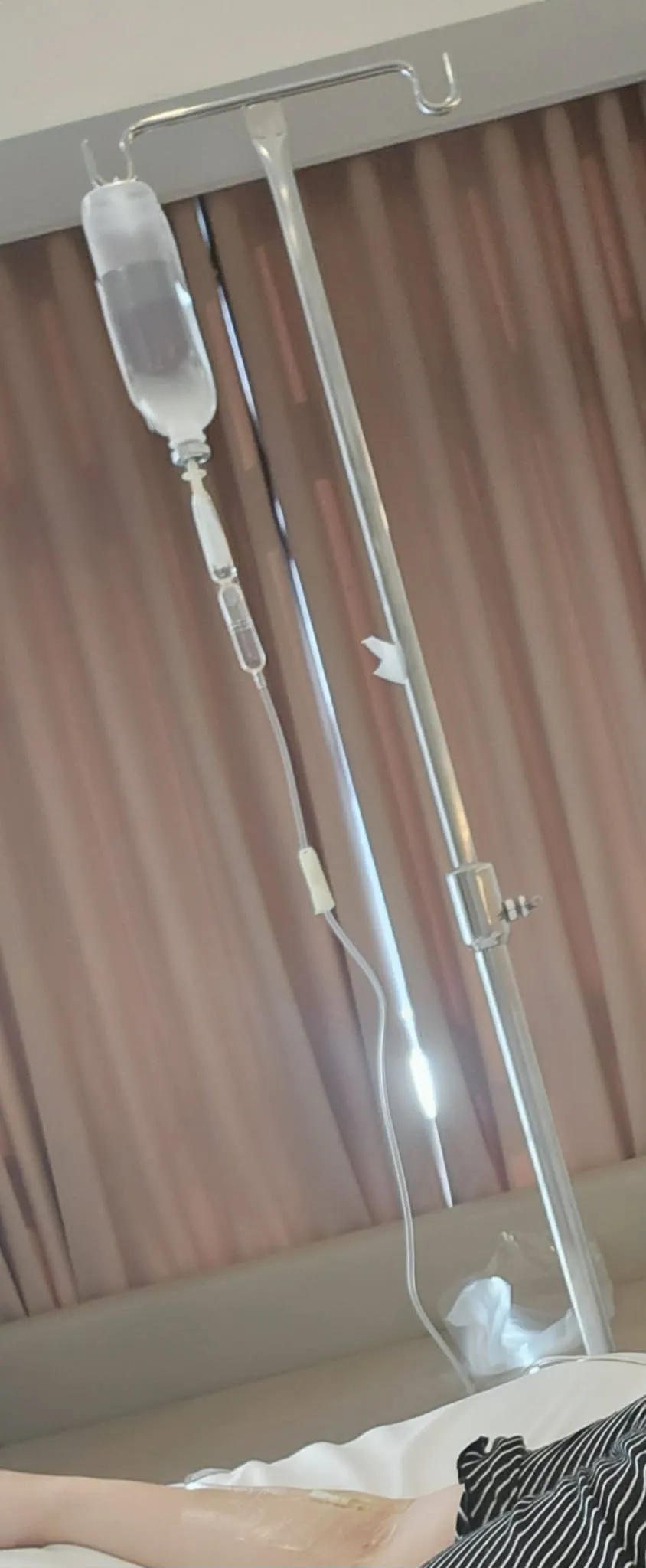
From the cell bank to the bedside, this was the final stage of a much longer manufacturing chain.
I found myself thinking about everything that had happened before that moment.
Somewhere much earlier there was a donor and a tissue sample. There was collection, isolation and expansion. There were decisions about culture conditions and passage number. There was testing. There was banking. There was cryopreservation. There was thawing and preparation.
The clinical product is the final expression of all of those decisions.
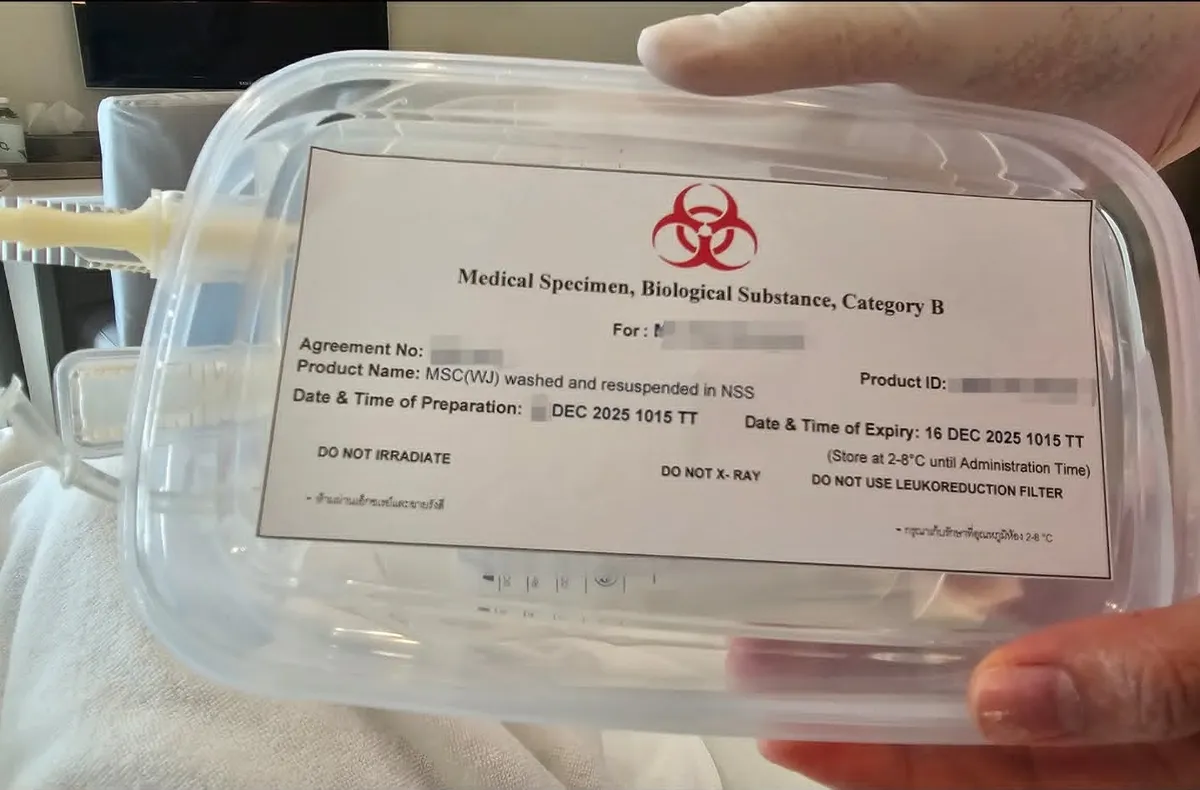
The label on the preparation identifies the product as MSC(WJ), indicating Wharton's-jelly-derived mesenchymal stromal cells, washed and resuspended before administration.
And this is why I find the move toward better MSC manufacturing so encouraging. It doesn't necessarily mean that every new manufacturing technology will produce a better therapy. Most of these approaches are still being developed and validated, and many remain firmly in the preclinical or translational stage.
What it does mean is that the field is becoming more sophisticated about what a "cell therapy" actually is.
Perhaps we have been asking "which cell?" when we should also ask "which state?"
This is where my various rabbit holes in regenerative medicine have started to converge for me.
I've been looking at ECM and acellular dermal-matrix research, where the physical and biochemical environment can influence how cells interact with tissue. I've been following MSC secretome and EV work, where what the cells release may be as important as the cells themselves. I've been reading about biomaterials, microcarriers and increasingly controlled bioreactor systems.
At first these seemed like separate areas.
They increasingly look like different pieces of the same puzzle.
We are learning how to create environments that influence cells, and then how to measure the biological consequences of those environments.
The collagen-heparan-sulfate microcarrier study is a particularly lovely example of this because the researchers aren't simply asking whether MSCs survive. They are asking how the surface they grow on changes their behaviour, how that behaviour changes under different physical conditions, and what happens to the secretome and extracellular vesicles produced along the way.
That is a much richer question than simply asking how many cells we can grow.
What I took home from China
I went to China expecting to see a stem-cell facility.
What I came home thinking about was manufacturing.
The cryogenic tanks were memorable, but the thing that stayed with me was the sheer number of steps between a biological source and a clinical product. Once you see that chain physically, it becomes difficult to think about MSCs as though they are a single, interchangeable thing.
They have a history.
They have an environment.
They have a manufacturing process.
And, increasingly, we have the tools to start asking what those things do to the biology.
I think this is going to become one of the more important conversations in regenerative medicine over the next few years.
Not simply where did the cells come from?
Not simply how many cells are in the dose?
But:
How were they made?
What state were they in when they were made?
What did they produce?
How was that measured?
And perhaps most importantly, can we make the same biological product again?
For a field built around living, responsive cells, that last question may be one of the hardest.
It may also be the one that determines whether MSC therapy can move from an intriguing biological intervention into something that can genuinely be manufactured as a medicine.
After seeing the infrastructure behind it in person, I have a feeling that the future of MSC therapy is going to be as much about how we make the cells as it is about the cells themselves.
And somehow, that makes the tiny things inside those enormous cryogenic tanks feel rather different.
A note on the evidence
The collagen-heparan-sulfate microcarrier study is preclinical research. It does not show that microcarrier-grown or space-grown MSCs are clinically superior, and it certainly doesn't establish a better treatment for patients. What it does show is that the physical and biochemical conditions used to culture MSCs can influence expansion, recovery and secretome characteristics, which is highly relevant to the broader problem of scalable cell manufacturing.
The 2024 Beike paper is particularly relevant because it describes a GMP-compliant WJ-MSC manufacturing process developed and scaled at Beike's Shenzhen facility, with testing of identity, purity, viability, potency, genomic stability and microbiological safety. It is evidence of a manufacturing programme, not evidence that every clinical application of the resulting cells is effective.
Research & sources
Rivera-Crespo C, et al. (2026). Collagen-heparan sulfate microcarriers support mesenchymal stem cell culture in microgravity and streamline post-flight recovery. npj Microgravity. Published 6 August 2026.
Read the full paperChu W, et al. (2024). A GMP-compliant manufacturing method for Wharton's jelly-derived mesenchymal stromal cells. Stem Cell Research & Therapy. 15, 131.
Read the full paperTowards the Standardization of Mesenchymal Stem Cell Secretome-Derived Product Manufacturing for Tissue Regeneration (2023).
Read the full reviewGMP-compliant, serum-free cultures preserve therapeutic potential of extracellular vesicles from human mesenchymal stromal cells.
Read the full paperCharacterization, Preconditioning, Safety, and Other Issues of MSC-Derived EVs and Secretome (2026).
Read the full review