[Field Notes] Before the Stem Cells Reach the Syringe
What I saw inside a Shenzhen cell-manufacturing facility made me think differently about what an MSC actually is.
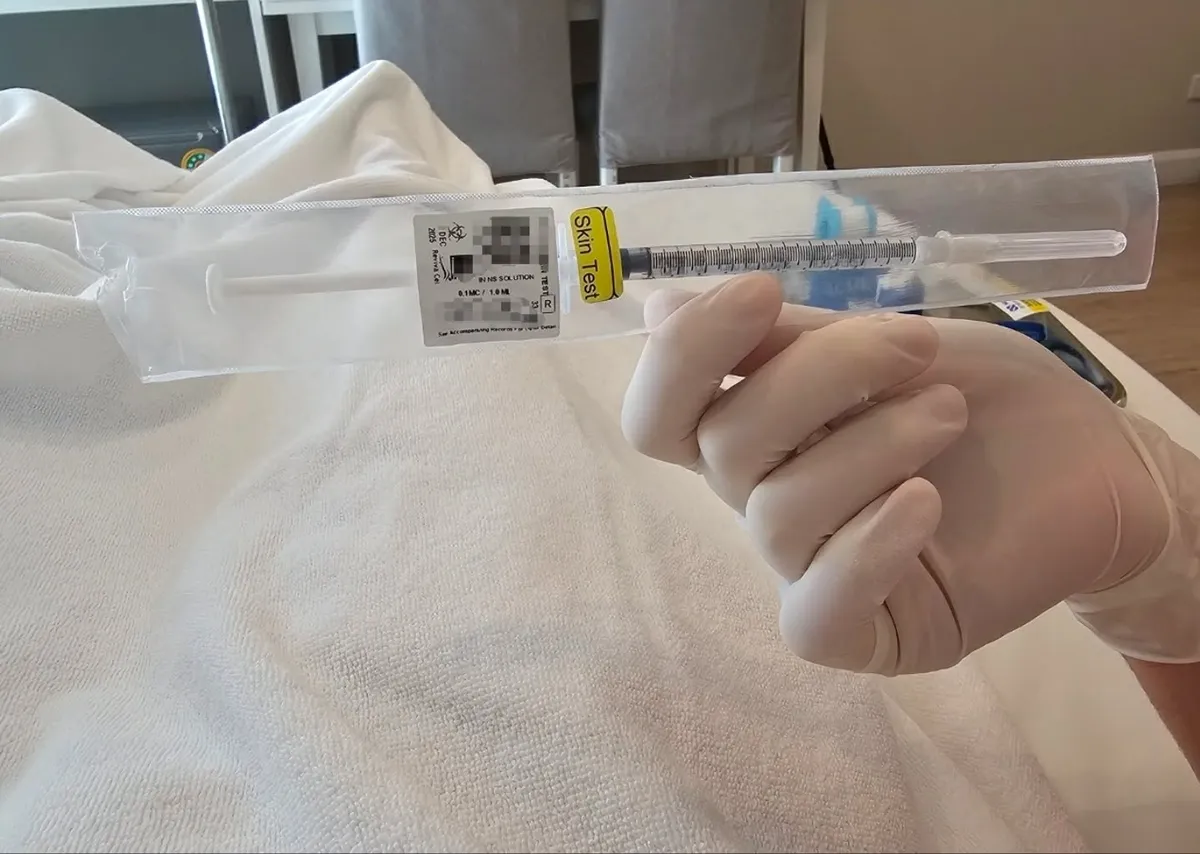
I recently went to China with a very specific curiosity. I wanted to see what happens to mesenchymal stromal cells before they become the thing we usually talk about: a dose in a syringe, ready to be given to a patient.
I had been reading so much about umbilical-cord MSCs, secretomes, extracellular vesicles, extracellular matrix and the increasingly complicated question of what makes one cell preparation different from another that I wanted to see the less glamorous part for myself. Not the treatment room, but the infrastructure behind it.
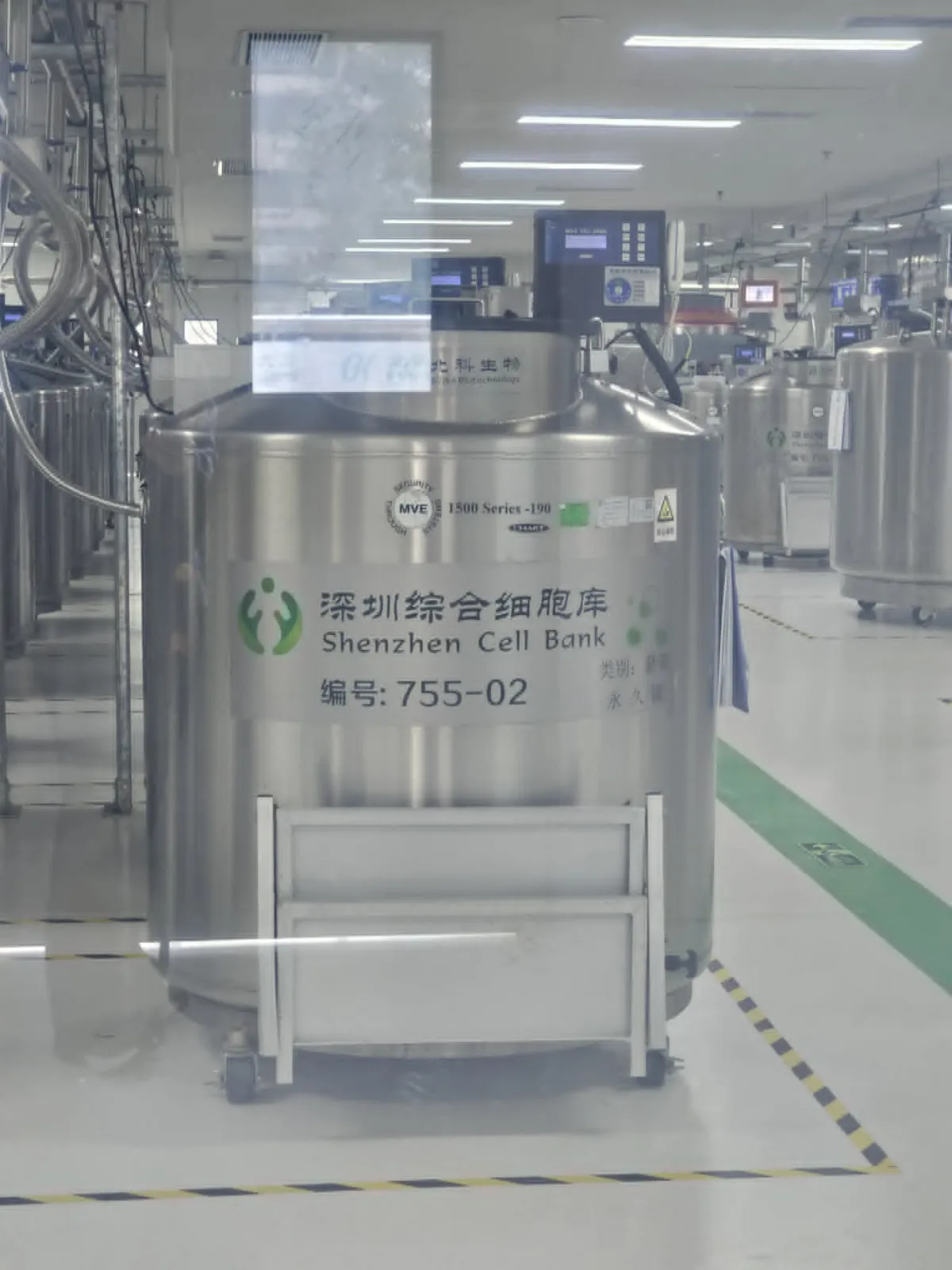
I visited Beike Biotechnology's cell-therapy facilities and the Shenzhen Comprehensive Cell Bank, where I was able to see the cell-banking and preparation environment, including the large cryogenic storage systems used for biological material.
I had also received 20 million umbilical-cord-derived MSCs intravenously myself. Part of the reason was simply curiosity. I wanted to see whether they would make any noticeable difference to my osteoarthritis, pain or inflammation, as well as to some of the other things MSCs are being investigated for.
The change in pain was surprisingly quick. I noticed a reduction almost immediately, although I don't want to turn my experience into a claim about what caused it. The other things I was hoping to learn about are much less instant. Those are more of a trust-the-process experiment for me, where the useful thing is to establish a baseline, measure what I can and see what happens over time.
That was one reason I had spent so much time establishing measurements beforehand. At Bumrungrad Hospital, I had blood work and other tests done across most of the day, from around 7am until 7pm, so I would have a set of baseline measurements to compare with later. I'll put that whole pre-treatment work-up into another post because there was far too much to squeeze into this one.
Seeing the manufacturing side in China made me think about the treatment differently. We often speak about MSCs as though the cell itself is the product. In reality, the cell is the end result of a long chain of decisions about where it came from, how it was isolated, how it was expanded, what it grew on, what it was exposed to, how many times it was passaged, how it was stored and how it was prepared before administration.
The more I read about that process, the more I think the useful question isn't simply which MSCs are best. It is also what exactly have we manufactured?
The part of stem-cell therapy that patients rarely see
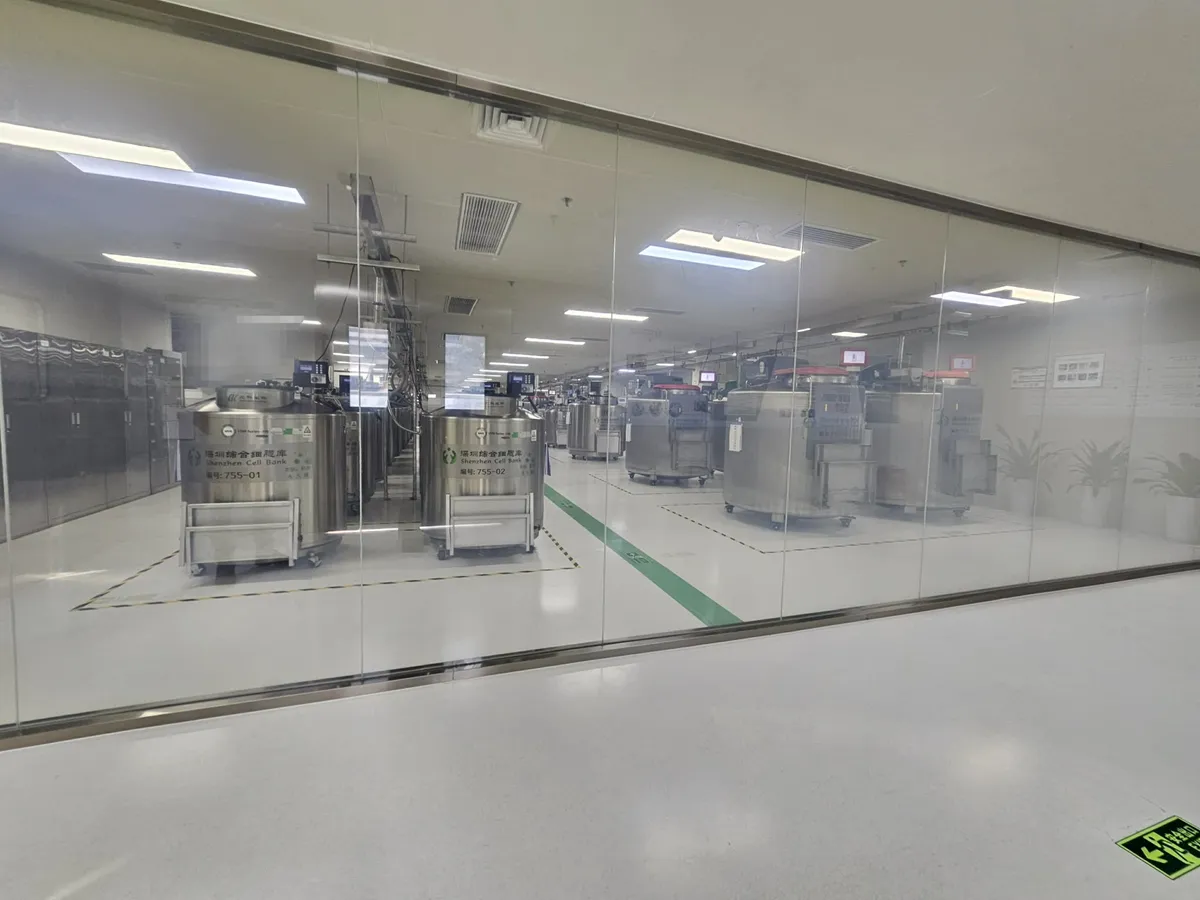
There is something rather humbling about standing in front of a cryogenic cell bank.
The tanks are enormous, quiet and almost industrial-looking. There is none of the visual drama we tend to associate with biotechnology. Instead, there are storage vessels, laboratories, documentation and systems designed to keep living biological material identifiable, controlled and available.
That is probably a much better picture of what cellular medicine actually looks like.
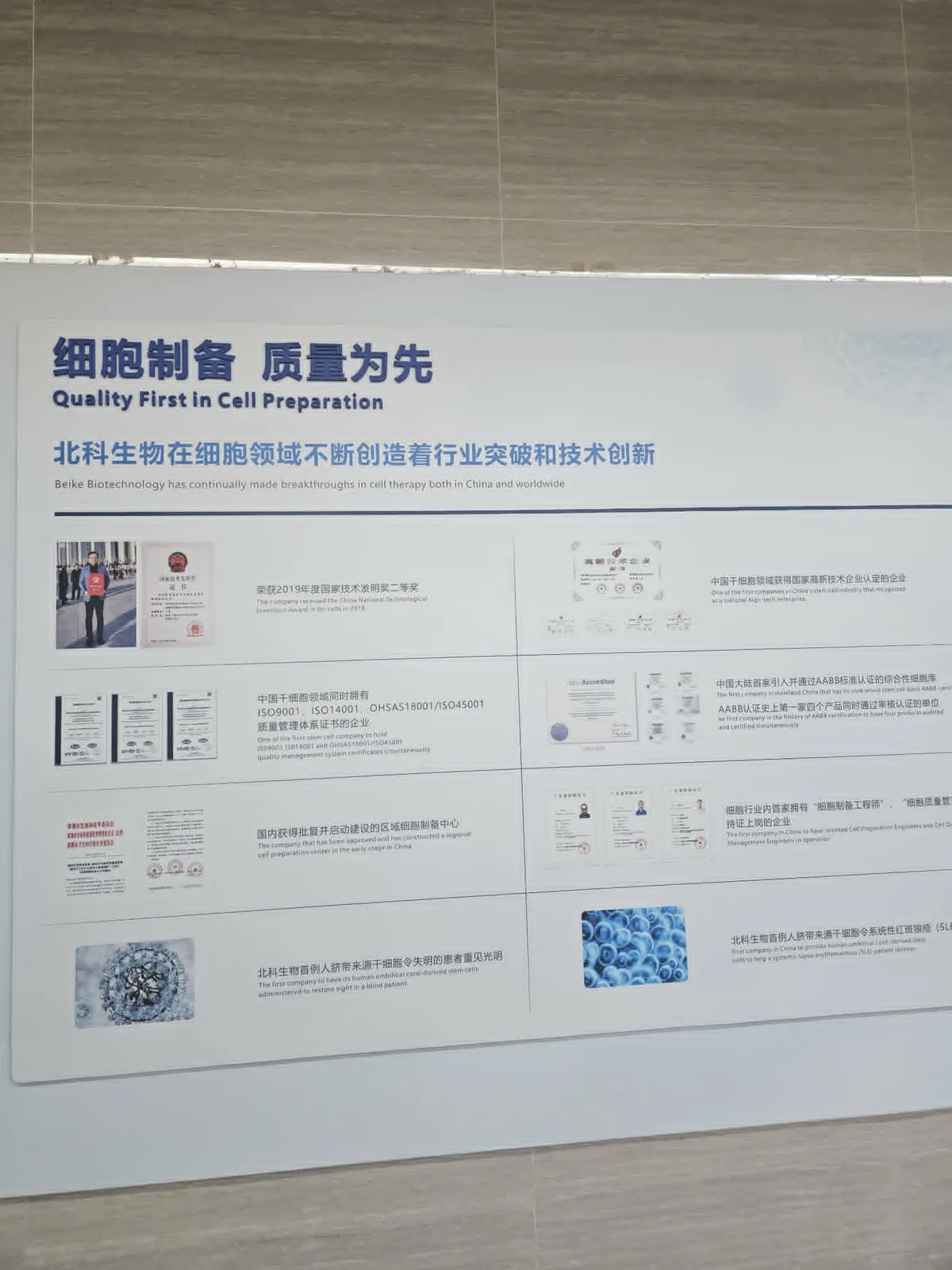
Beike describes a network of cell banks and cell-preparation laboratories across China, with processes covering donor selection, cell preparation, quality control, storage and delivery. Its Shenzhen facility has also reported external accreditation for specified cell-storage and cell-therapy activities.
None of this establishes that a particular MSC treatment is clinically effective. Quality systems and clinical efficacy are different questions, and I think it is important not to blur them. What it does show is the scale of infrastructure required when living cells are being treated as therapeutic products.
What struck me most was that the journey of an MSC doesn't begin when it is injected. It begins much earlier.
A cell has a history
An MSC doesn't arrive in a vial as a blank biological object. It has a donor and a tissue of origin. It has experienced a particular isolation process and a particular culture environment. It has been exposed to particular nutrients, growth factors, surfaces, oxygen levels and mechanical conditions. It has divided a certain number of times, then been frozen, thawed and prepared in a particular way.
All of those variables can influence the biology of the resulting cell population.
This becomes especially important when we stop thinking only about what an MSC is and start thinking about what an MSC does.
MSCs are highly responsive cells. Their biological effects are understood to involve paracrine signalling, immunomodulation and the release of a complex collection of soluble factors and extracellular vesicles. Research into MSC secretome manufacturing has shown that donor source, passage number, cell density, culture medium, conditioning time and the surrounding microenvironment can all influence what the cells produce.
That makes the culture environment more consequential than it first appears. If the environment can influence the cell, and the cell's behaviour can influence what it releases, then manufacturing isn't simply about producing more MSCs. It may also be about producing a particular state of MSC.
Beike has actually published on the manufacturing problem
What made my visit particularly useful was being able to connect what I was seeing with something I had already encountered in the literature.
In 2024, researchers from Shenzhen Beike Biotechnology published a peer-reviewed study describing a GMP-compliant method for Wharton's jelly-derived MSCs. They worked through the process of scaling production from laboratory culture to a pilot-scale cell-factory system, establishing master and working cell banks and evaluating the resulting cells for identity, purity, viability, potency, proliferation, genomic stability and microbiological safety.
That list is worth paying attention to because it is a very different vocabulary from simply saying, "We have stem cells."
Cell identity matters. Purity matters. Viability matters, but so does potency. Genetic stability and microbiological safety matter too. A viable cell isn't automatically a therapeutically useful cell.
This is where cellular medicine starts to resemble pharmaceutical manufacturing, except that the active ingredient is alive and capable of responding to the manufacturing process itself. A conventional drug doesn't alter its biological state because it spent an extra day growing on a particular surface. An MSC can.
So what are we actually manufacturing?
Traditional MSC expansion relies heavily on cells attaching to a surface and multiplying across it. That works reasonably well at small scale, but becomes more difficult when very large numbers of cells are required. You can keep adding culture vessels, but eventually the process becomes labour-intensive, space-hungry and harder to control consistently.
Microcarriers offer another possibility. They give adherent cells a much larger surface area while allowing them to be grown in suspension within a bioreactor, making larger-scale production more practical.
But the microcarrier isn't simply a piece of floating scaffolding. The material, surface chemistry, stiffness, structure and molecules presented to the cell can influence how the cell attaches and signals. The surface is therefore part of the biological environment rather than just a convenient place for the cells to grow.
That brings us to a paper published in npj Microgravity in August 2026.
The space experiment that is really about Earth
A study published in npj Microgravity investigated collagen-heparan-sulfate microcarriers for MSC culture, including cryopreservation, thawing and expansion aboard the International Space Station.
The researchers engineered the microcarrier surface using collagen and heparan sulfate and found that different surface chemistries affected MSC growth and behaviour. In microgravity, the cells expanded differently from ground controls, while the engineered microcarriers supported cell attachment and recovery.
For regenerative medicine, one of the more relevant findings was in the secretome. The researchers observed changes in extracellular-matrix output and increased extracellular-vesicle release, while retaining bioactive microRNA cargo.
The spaceflight is obviously the unusual part of the experiment, but the underlying question is much more terrestrial: does the environment in which we manufacture the cell influence the biological material that the cell produces?
That question matters whether the cells are being grown on Earth or in orbit.
The cell and its secretome are beginning to look like one manufacturing problem
I've been following the research around MSC secretome and extracellular vesicles alongside work on extracellular matrix and acellular dermal matrices, and I keep finding myself coming back to the same idea from different directions.
Changing culture conditions can alter MSC behaviour and the quantity and characteristics of the extracellular vesicles they release. Passage number, cell density and other culture parameters have been shown to influence EV production and biological activity.
The same principle appears in work on MSC secretome manufacturing. Reviews of the field have pointed to donor source, expansion conditions, passage number, confluency, culture medium, conditioning period and microenvironmental cues as variables that can affect the resulting secretome.
Put together, the relationship starts to look something like this:
manufacturing environment → MSC state → secretome and extracellular vesicles → biological activity
That is why I think the manufacturing question deserves more attention than it usually receives.
We can become very focused on the number of cells in a dose, but cell number is only one characteristic of a cellular product. Two preparations could contain the same number of viable MSCs and still have different biological properties because their expansion histories and environments were different.
So when someone says they received 20 million MSCs, that tells us something important. It doesn't tell us everything we might want to know about those cells.
Viability isn't potency
This is where quality control becomes much more than a regulatory exercise.
A cell can be alive without necessarily having the particular functional properties we care about therapeutically. That is why modern MSC manufacturing studies increasingly look beyond simple cell counts and viability. Researchers are interested in identity, purity, genomic stability, functional assays and potency alongside the more familiar measures of cell number and survival.
The 2024 Beike manufacturing study, for example, explicitly evaluated potency as part of its product characterisation.
The same principle becomes even more important when we move from the cells themselves to their secretome or extracellular vesicles. A higher EV yield doesn't necessarily mean a more potent EV preparation. The cargo, composition, biological activity and consistency of the product matter as well.
Reviews of MSC-EV translation have therefore emphasised the importance of controlling the parent-cell source, culture conditions, passage history, storage and recovery, as well as defining meaningful quality attributes and potency assays for the final product.
The more I read about this, the harder it becomes to separate the cell from the process that produced it.
The process becomes part of the product.
From an umbilical cord to a vial
When you are sitting in a treatment room looking at a syringe, it is very easy to think only about what is inside it.
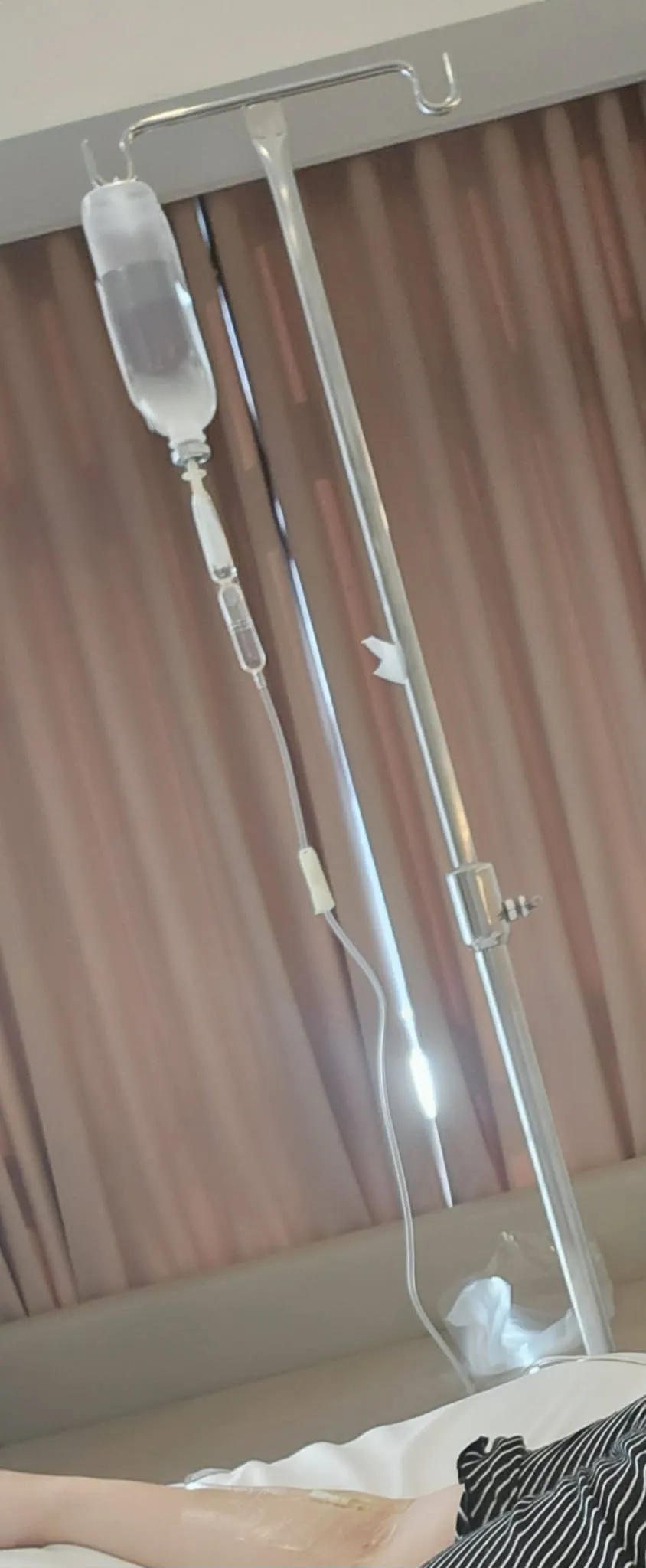
In my case, the IV contained 20 million umbilical-cord-derived MSCs. Before the infusion, the clinic also performed a small skin patch test using a syringe as part of the pre-administration process.
The change in pain was surprisingly quick. I noticed a reduction almost immediately, although I don't want to present that as evidence that the MSCs caused it. One person's response can't tell us whether a treatment works, and there are plenty of reasons to be cautious about interpreting an immediate change.
The rest of what I was hoping to learn is much slower. I'm interested in whether anything changes over time with pain, inflammation and the other things I was hoping to observe. For those, I'm essentially taking a trust-the-process approach while trying to keep enough measurements to make the observation useful.
That is why the baseline testing mattered to me. At Bumrungrad Hospital, I spent most of the day having blood work and other tests done, from around 7am until 7pm. I wanted to have something more meaningful than memory or a general feeling of whether I was "better" afterwards. I'll put the full pre-treatment work-up into another post because there was far too much to fit here.
What stayed with me after the infusion, though, was how little of the story was visible in that treatment room.
Somewhere much earlier there had been a donor and a tissue sample. There was collection, isolation and expansion, followed by decisions about culture conditions, passage number and quality control. There was banking and cryopreservation, then thawing, washing and preparation before the cells could finally reach the bedside.
By the time I was looking at that IV, I was seeing the very end of a much longer process.
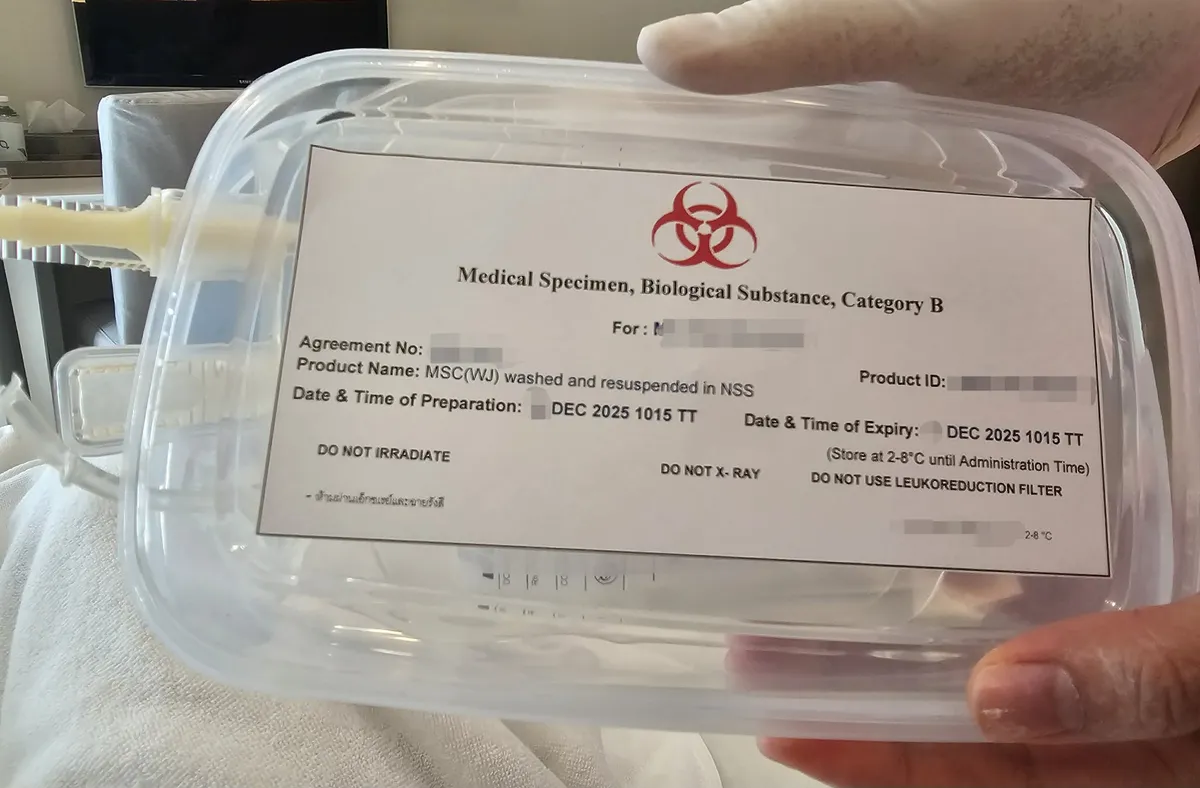
The label identifies the preparation as MSC(WJ), indicating Wharton's-jelly-derived mesenchymal stromal cells, washed and resuspended before administration.
I liked seeing that label because it made the idea of cell manufacturing much more concrete. These weren't simply "stem cells". They were a biological product with a source, a manufacturing history, a storage history and a defined preparation before administration.
That changed the way I thought about my own infusion. Looking at the syringe, I wasn't just looking at 20 million cells. I was looking at the endpoint of a manufacturing process.
And that is where my interest in the manufacturing side of regenerative medicine really began.
We tend to talk about MSC therapy as though the important question is simply whether MSCs work. But the cells themselves are only part of the story. How they are isolated, expanded, handled, stored and prepared can all become part of the final product.
That doesn't mean every new manufacturing technology will produce a better therapy. Many of the approaches being developed today are still preclinical or translational, and better manufacturing does not automatically equal better clinical outcomes.
It does mean that the field is becoming more sophisticated about what a "cell therapy" actually is.
The question is becoming less about whether we have MSCs, and more about which MSCs, made how, under what conditions, with what quality controls, and with what evidence that the resulting product behaves consistently.
Perhaps we have been asking "which cell?" when we should also ask "which state?"
This is where several of my regenerative-medicine rabbit holes have started to converge.
I've been looking at ECM and acellular dermal-matrix research, where the physical and biochemical environment can influence how cells interact with tissue. I've been following MSC secretome and EV work, where what the cells release may be as important as the cells themselves. I've also been reading about biomaterials, microcarriers and increasingly controlled bioreactor systems.
At first these seemed like separate areas. Increasingly, they look like different pieces of the same puzzle.
We are learning how to create environments that influence cells, and then how to measure the biological consequences of those environments. The collagen-heparan-sulfate microcarrier study is a useful example because the researchers aren't simply asking whether MSCs survive. They are asking how the surface they grow on changes their behaviour, how that behaviour changes under different physical conditions, and what happens to the secretome and extracellular vesicles produced along the way.
That is a much richer question than simply asking how many cells we can grow.
What I took home from China
I went to China expecting to see a stem-cell facility. What I came home thinking about was manufacturing.
The cryogenic tanks were memorable, but what stayed with me was the sheer number of steps between a biological source and a clinical product. Once you see that chain physically, it becomes difficult to think about MSCs as though they are a single, interchangeable thing.
Their source matters. Their culture environment matters. Their expansion history, storage and preparation can matter too. Increasingly, we have the tools to ask what those differences do to the biology rather than simply assuming that all MSC preparations are equivalent.
For me, that changes the question I want to ask when I see a cellular therapy advertised or read about a new clinical study. It isn't simply where did the cells come from? or how many cells are in the dose?
I want to know how they were made, what state they were in, what was measured, and whether the manufacturer can consistently reproduce the same biological product.
That last question may be one of the hardest in cell therapy. Living cells respond to their environment, which means that manufacturing isn't merely a matter of putting the same ingredients into the same recipe. The process itself can influence what comes out at the other end.
After seeing the infrastructure behind it in person, I find myself thinking about MSC therapy a little differently. The future may depend as much on learning how to manufacture and measure a consistent cellular state as it does on finding another source of cells.
And somehow, that makes the tiny things inside those enormous cryogenic tanks feel rather different.
C·🌷
A note on the evidence
The collagen-heparan-sulfate microcarrier study is preclinical research. It does not show that microcarrier-grown or space-grown MSCs are clinically superior, and it certainly doesn't establish a better treatment for patients. What it does show is that the physical and biochemical conditions used to culture MSCs can influence expansion, recovery and secretome characteristics, which is relevant to the broader problem of scalable cell manufacturing.
The 2024 Beike paper is particularly relevant because it describes a GMP-compliant WJ-MSC manufacturing process developed and scaled at Beike's Shenzhen facility, with testing of identity, purity, viability, potency, genomic stability and microbiological safety. It is evidence of a manufacturing programme, not evidence that every clinical application of the resulting cells is effective.
My own IV experience is just that: my own experience. The rapid change I noticed in pain is not evidence of efficacy, and the longer-term effects are something I intend to observe rather than assume.
Research & sources
Rivera-Crespo C, et al. (2026). Collagen-heparan sulfate microcarriers support mesenchymal stem cell culture in microgravity and streamline post-flight recovery. npj Microgravity. Published 6 August 2026.
Read the full paperChu W, et al. (2024). A GMP-compliant manufacturing method for Wharton's jelly-derived mesenchymal stromal cells. Stem Cell Research & Therapy. 15, 131.
Read the full paperTowards the Standardization of Mesenchymal Stem Cell Secretome-Derived Product Manufacturing for Tissue Regeneration (2023).
Read the full reviewGMP-compliant, serum-free cultures preserve therapeutic potential of extracellular vesicles from human mesenchymal stromal cells.
Read the full paperCharacterization, Preconditioning, Safety, and Other Issues of MSC-Derived EVs and Secretome (2026).
Read the full review